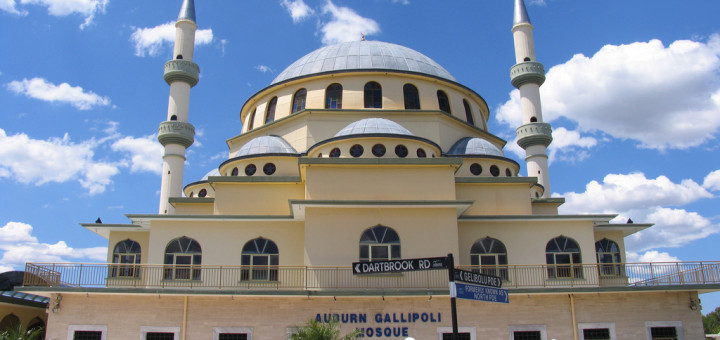
The first mosque on the present mosque site was opened for worship on the 3rd of November 1979. It was a house which had the internal walls removed to generate an open space environment. The construction of the present mosque structure began in 1986. The Mosque’s construction was completed and officially opened on 28th of November 1999, twenty years after the initial opening. The current building took a painstaking 13 years to complete. The construction time was restrained due to a lack of funds and the time required to raise funds through donations. The project was initiated and largely funded by the Turkish community. The total cost of the project is about six million dollars. Many other local Muslim members irrespective of their ethnic background have greatly contributed to the costs attributed to the building of the mosque. The present congregation is approximately 50% Turkish and the remaining 50% is made up of Muslims from diverse ethnic backgrounds. The site, above which the mosque stands, has a total area of 1 acre or 4,000 square meters. The mosque was designed based on the Classical Ottoman construct characterised by a central dome and minarets. The builder for the mosque was Ahmet Asim who donated much of his time. The name of the mosque – Auburn Gallipoli Mosque – reflects the shared legacy of the Australian society and the main community behind the construction of the mosque, the Australian Turkish Muslim Community.
The History of Muslims in AustraliaThe short film documentary entitled “Before1770” is a film designed to encapsulate the history of Muslims in Australia before 1770. Abu Hanifa Institute, a centre for education in traditional Islam and youth mentoring, utilised its resources and community support to document the facts in this space. This meant embarking upon a journey to critical locations in the Northern Territory, such as Arnhem Land, Bawaka, and Groote Eylandt to see first hand, the places and people who hosted the Macassan Muslims. This endeavour also meant speaking to academics specialised in the field as well as Aboriginal elders from the Yolngu clan. The idea of this short film is to establish Islam’s long-standing connection with Australia. It is not designed to cause pain or disrespect to any figure, person, organisation or a particular community.